Solar chargers sound simple—so what’s the catch?
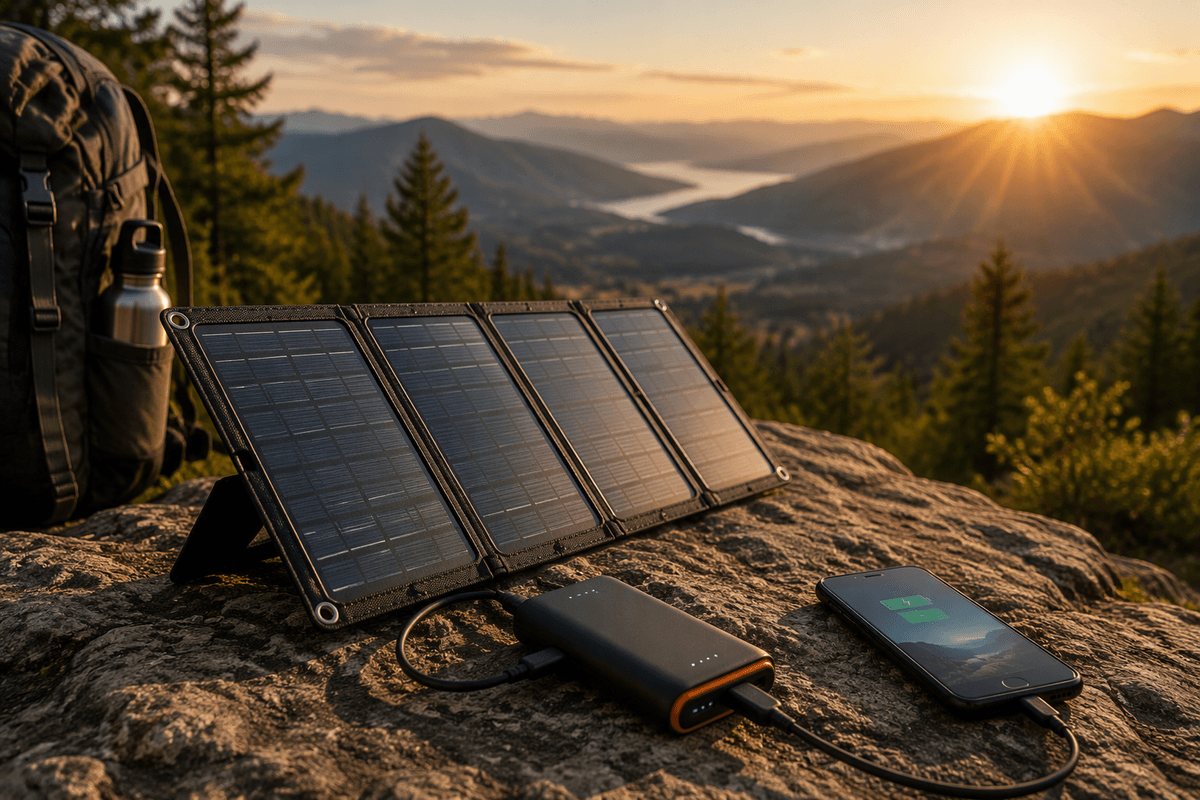
A solar charger seems like an easy win: clip a panel to your pack, let the sun do the work, and your phone stays alive. The catch is that “sunlight” on a product page rarely matches real life. Shade from trees, changing angles, clouds, and even a dirty panel can cut output fast. Some models also blur the line between a solar panel and a solar power bank, which changes what “charging” actually means. The practical reality is you’re trading speed and predictability for independence. If you expect wall-outlet performance, you’ll be disappointed—and you might carry more bulk than you planned.
First, match the charger to how you actually travel
Picture your most common trip. If you’re car camping, road-tripping, or staying in rentals, you usually have outlets at some point—you just need a buffer. A regular power bank (or a power bank that can be topped up by a small panel) often makes more sense than relying on direct solar charging all day. You charge the bank when power is available, then use it at night or on the move.
If you’re hiking for days, paddling, overlanding, or planning for outages where you can’t count on the grid, a dedicated fold-out panel becomes more valuable. It can refill a phone or a battery pack steadily while you’re outside, but you’ll pay in space, setup time, and attention. You may need to stop and reposition it to keep output decent, and you’ll get less than you hoped on cloudy days or in forest shade.
Reason #1: When outlets disappear, solar keeps you connected
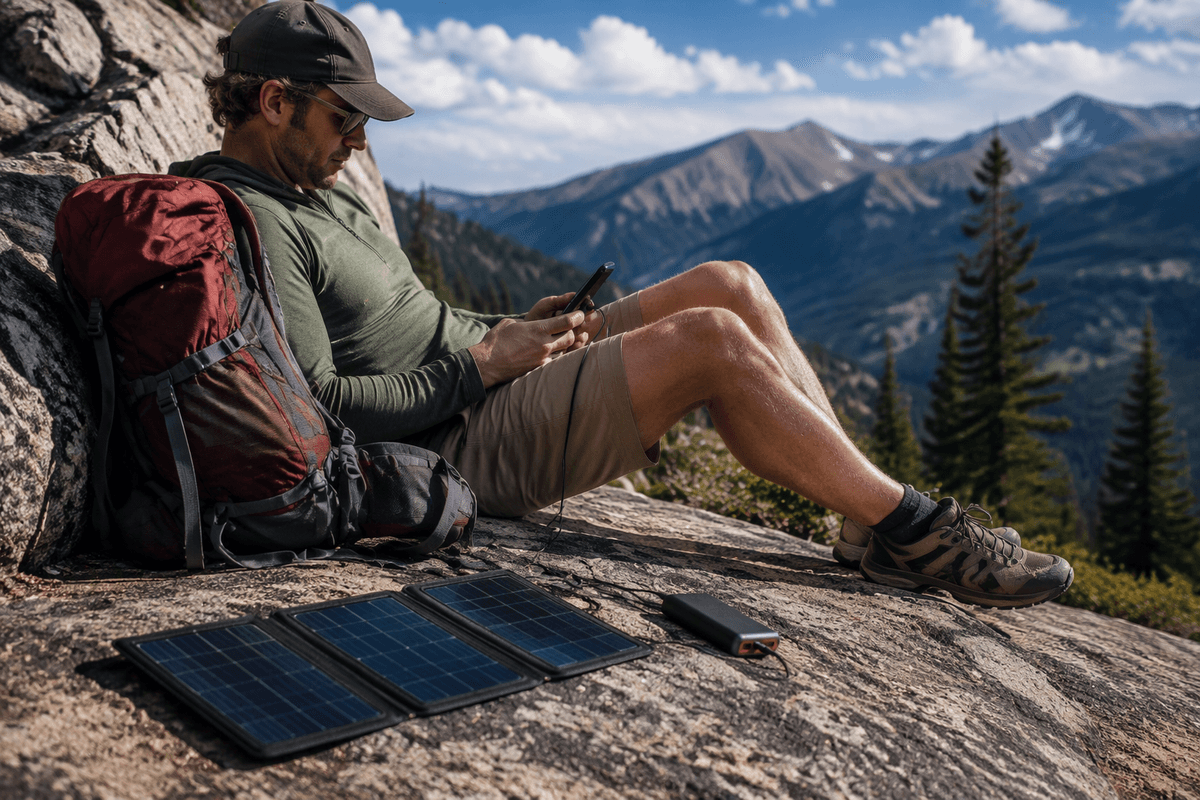
You notice the value of solar the moment your normal “just plug in later” plan breaks. A trailhead with no service station, a long layover near a dead outlet, a campground where every socket is taken, or a neighborhood outage that lasts into the next day—all of those turn a low battery from a minor annoyance into a real problem. Maps, two-factor logins, car-share apps, weather alerts, and even a simple text to say you’re running late all depend on a phone that stays on.
Solar doesn’t have to be fast to be useful here. If it can slowly replace what your phone burns in the background—or top up a power bank enough for one more night—you keep a working safety net. The trade-off is that you’ll spend time managing it: setting the panel out, moving it as the sun shifts, and accepting that shade or clouds may mean you’re only gaining a little at a time.
Reason #2: Off-grid convenience beats hunting for power
Even when outlets exist, they’re often inconvenient: the only plug is behind a vending machine, the café wants you to buy another drink, the airport seat has a dead USB port, or the campground pedestal is a long walk from your site. That “power scavenger hunt” costs time and attention right when you’d rather be setting up camp, cooking, or getting back on the road. A small fold-out panel plus a power bank lets you turn downtime into charging time—hang it on the windshield, prop it on a picnic table, or lay it out while you break for lunch.
The convenience is real, but it isn’t free. You’ll carry extra bulk, keep cables organized, and occasionally babysit placement to avoid shade. And if you need a fast refill before dinner, solar may not catch you up—so treating it as a steady trickle into a battery you can use later usually works best.
Reason #3: The long-game value—less waste, fewer paid charges
You also start noticing a slower payoff: fewer “emergency buys” and less throwaway charging gear. When you have some way to make power outside, you’re less likely to grab a cheap gas-station power bank, burn through disposable batteries for lights, or retire an older battery pack just because you couldn’t top it up on a trip. Solar won’t replace the grid, but it can stretch what you already own—keeping a decent power bank useful for longer, and reducing how often you need to carry multiple backups “just in case.”
There’s a small money angle, too. If you’ve ever paid for an outlet at a transit hub, rented a battery at a venue, or relied on a paid campsite charging station, even occasional solar top-ups can cut those moments down. The constraint is time: you’re trading convenience fees for patience, space in your bag, and the habit of setting the panel out early enough for it to matter.
The dealbreakers: charging speed, weather, and misleading specs
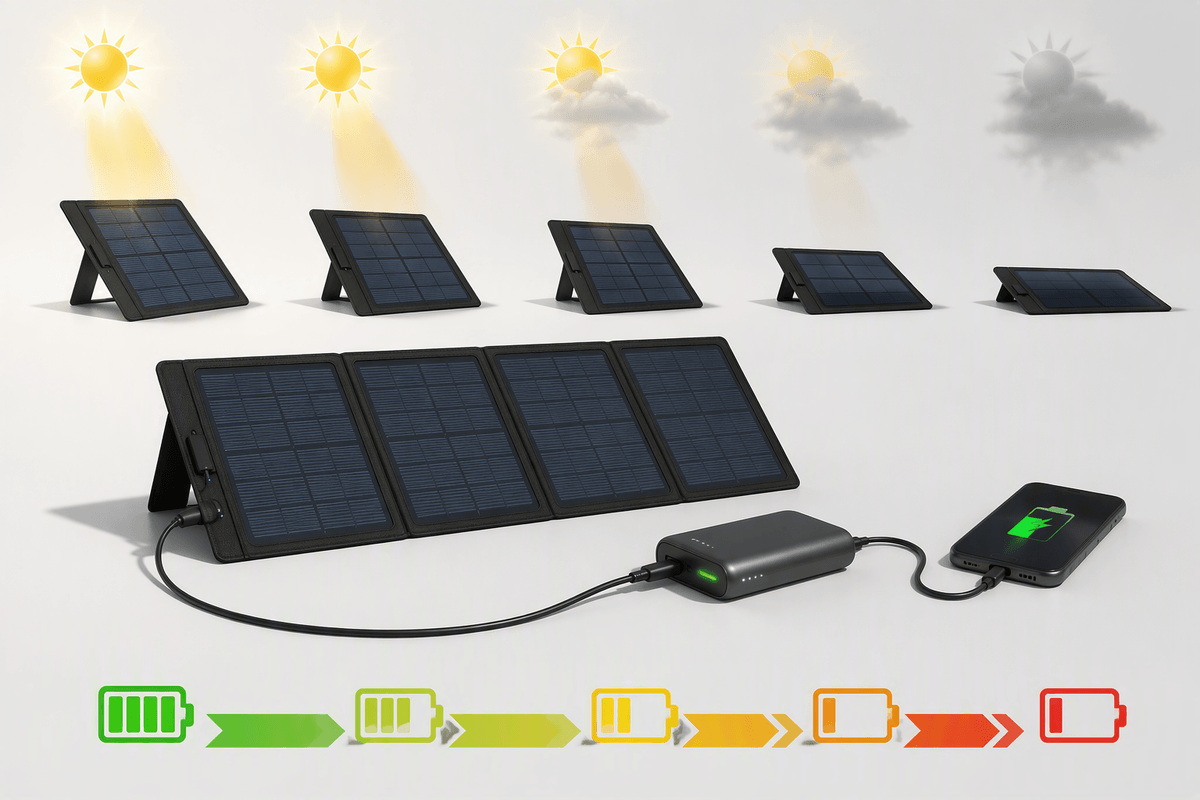
You’ll usually feel the dealbreakers the first time you try to “catch up” from a low battery. Solar can maintain, top off, or slowly refill a power bank, but it often can’t replace a fast wall charge on demand. Real output depends on angle, heat, and how steady the sun is, so a panel that looks strong on paper may deliver a fraction of that while you’re walking through trees or driving with changing shadows. That’s why direct phone-to-panel charging can be frustrating: the power rises and falls, and some phones respond by stopping or throttling charge.
Weather is the other reality check. Light overcast might still give you something; heavy clouds, rain, or a short winter day can make “solar charging day” feel like it never happened. Plan for it like you’d plan for a slow refill, not a guaranteed daily reset.
Then there are specs that blur expectations. “28W” or “5V/3A” is often the maximum under ideal sun, not what you’ll see on a picnic table at 4 p.m. Look for honest testing notes, multiple output ports you’ll actually use, and assume you’ll pay more—and carry more—for dependable performance.
A quick buying checklist for the right first solar charger
Before you buy, decide what you’re charging and when: if you mainly need a backup for nights or outages, start with a good power bank and add solar as a way to refill it, not your phone directly. For panels, look for USB-C output and enough real-world headroom to keep a bank charging even when the sun shifts; folding panels around 15–25W are usually a practical starting range. Check for weather resistance, a way to prop or hang it, and cables that won’t fall out when you move. Budget for bulk: a sturdier panel costs more and takes space, but it’s the difference between “sometimes” and “reliably.”